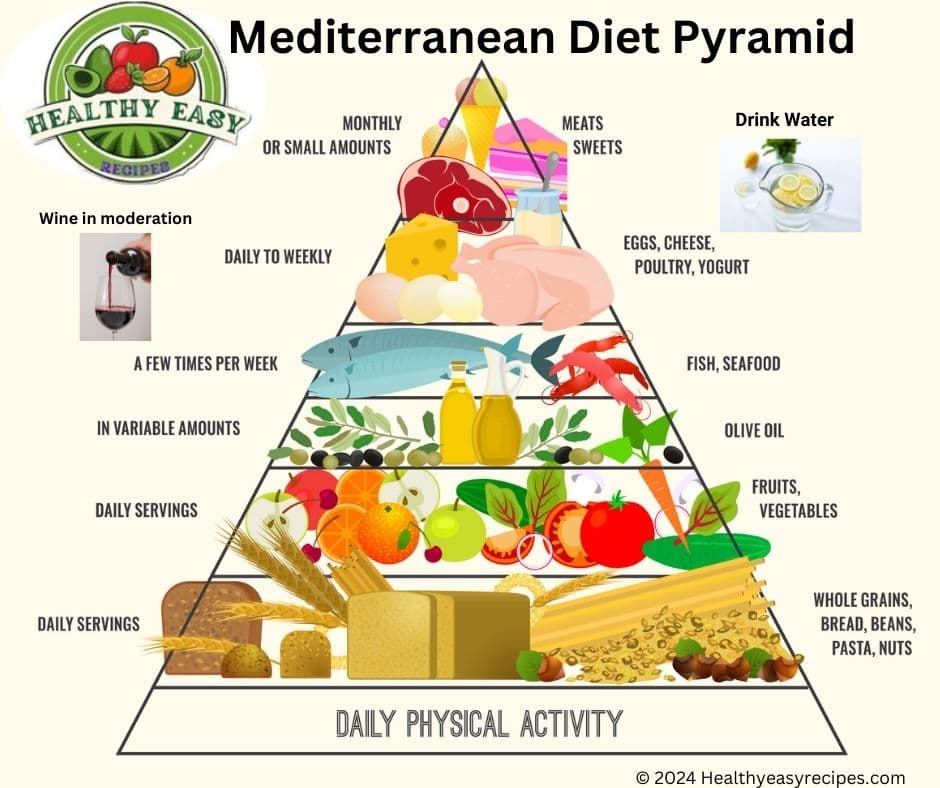
The Mediterranean Diet Pyramid is a simple visual guide that shows which foods to eat every day, which to enjoy several times a week, and which to limit. Based on the traditional eating habits of countries bordering the Mediterranean Sea, it emphasizes whole, minimally processed foods, healthy fats, regular physical activity, and enjoying meals with family and friends.
Whether you’re just getting started or looking to improve your eating habits, the Mediterranean Diet Pyramid makes healthy food choices easy to understand. In this guide, you’ll learn how the pyramid works, which foods belong on each level, the health benefits of following this eating pattern, and you’ll be able to download a free Mediterranean Diet Pyramid PDF to keep as a handy reference.
This eating pattern has been extensively studied and is associated with better heart health, improved metabolic health, and long-term wellness when combined with an active lifestyle.
How to Read the Mediterranean Diet Pyramid
The Mediterranean Diet Pyramid is designed to show how often you should eat different foods rather than strict serving sizes. Foods at the bottom of the pyramid should make up the foundation of your daily meals, while foods near the top should be enjoyed less frequently.
Base of the Pyramid
The foundation of the Mediterranean lifestyle includes regular physical activity, sharing meals with family and friends, getting enough rest, and staying well hydrated. These healthy habits are considered just as important as the foods you eat.
Eat Every Day
Build most of your meals around:
- Vegetables
- Fruits
- Whole grains
- Legumes
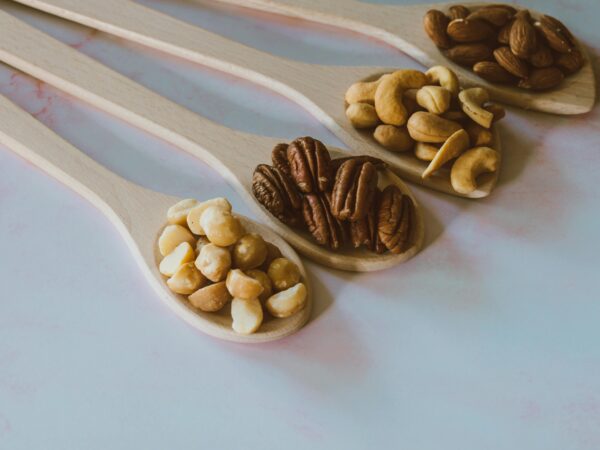
- Nuts and seeds
- Extra virgin olive oil
- Herbs and spices
These nutrient-rich foods provide fiber, vitamins, minerals, antioxidants, and healthy fats that support overall health.
Eat Several Times Each Week
Include these foods regularly throughout the week:
- Fish and seafood
- Poultry
- Eggs
They provide high-quality protein and important nutrients while fitting naturally into a Mediterranean eating pattern.
Eat in Moderation
Enjoy these foods in smaller amounts:
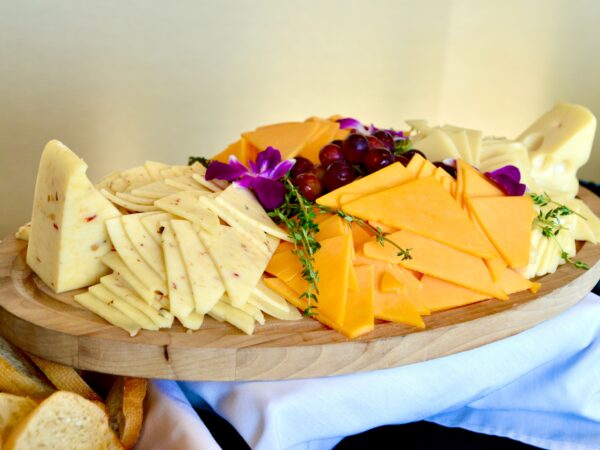
- Cheese
- Greek yogurt
- Other fermented dairy products
These foods can be part of a healthy Mediterranean diet when consumed in moderation.
Eat Occasionally
Limit foods that are higher in saturated fat, added sugar, or heavily processed ingredients, including:
- Red meat
- Processed meats
- Sweets and desserts
- Sugary drinks
Following the Mediterranean Diet Pyramid doesn’t require perfection. Instead, focus on making the foods at the bottom of the pyramid the foundation of your daily meals while treating foods at the top as occasional choices.
Health Benefits of the Mediterranean Diet Pyramid
Following the Mediterranean Diet Pyramid offers much more than a healthy way of eating. Research has shown that this eating pattern may support long-term health while making meals enjoyable and satisfying.
Supports Heart Health
The Mediterranean diet is rich in extra virgin olive oil, nuts, fish, fruits, and vegetables, which provide healthy fats, antioxidants, and fiber that support cardiovascular health.
May Help Reduce Inflammation
Many Mediterranean foods—including olive oil, fatty fish, berries, leafy greens, and herbs—contain natural compounds that may help support a healthy inflammatory response.
Supports Healthy Weight Management
Because the Mediterranean diet emphasizes filling, nutrient-dense foods, many people find it easier to maintain a healthy weight without following restrictive diets.
Helps Maintain Healthy Blood Sugar
Whole grains, legumes, vegetables, and healthy fats provide steady energy and can help support balanced blood sugar levels as part of an overall healthy lifestyle.
Promotes Long-Term Wellness
Unlike many restrictive diets, the Mediterranean Diet Pyramid encourages a balanced way of eating that can be enjoyed for life. Its flexibility makes it easier to build healthy habits that are both practical and sustainable.
Here’s a 1-day Mediterranean diet plan including breakfast, lunch, snacks, and dinner
Breakfast: Greek Yogurt With Berries
Creamy Greek yogurt topped with fresh berries and a sprinkle of nuts for a protein-rich breakfast.

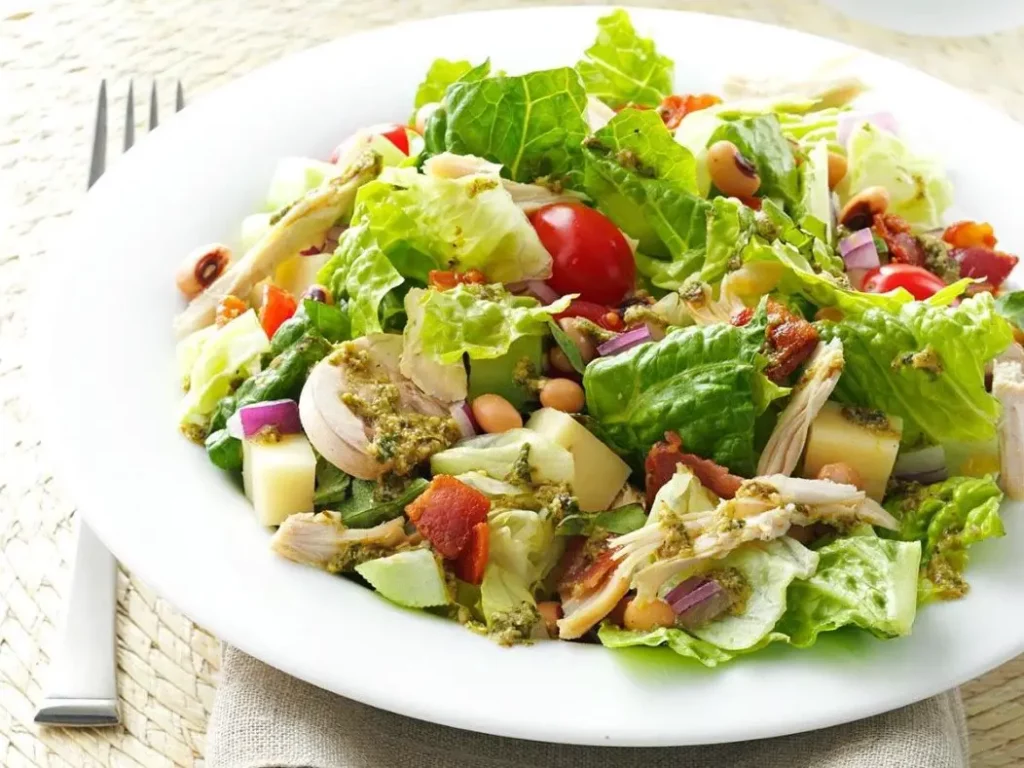
Lunch: Italian Chicken Salad
A colorful salad with lean chicken, fresh vegetables, olive oil, and herbs.
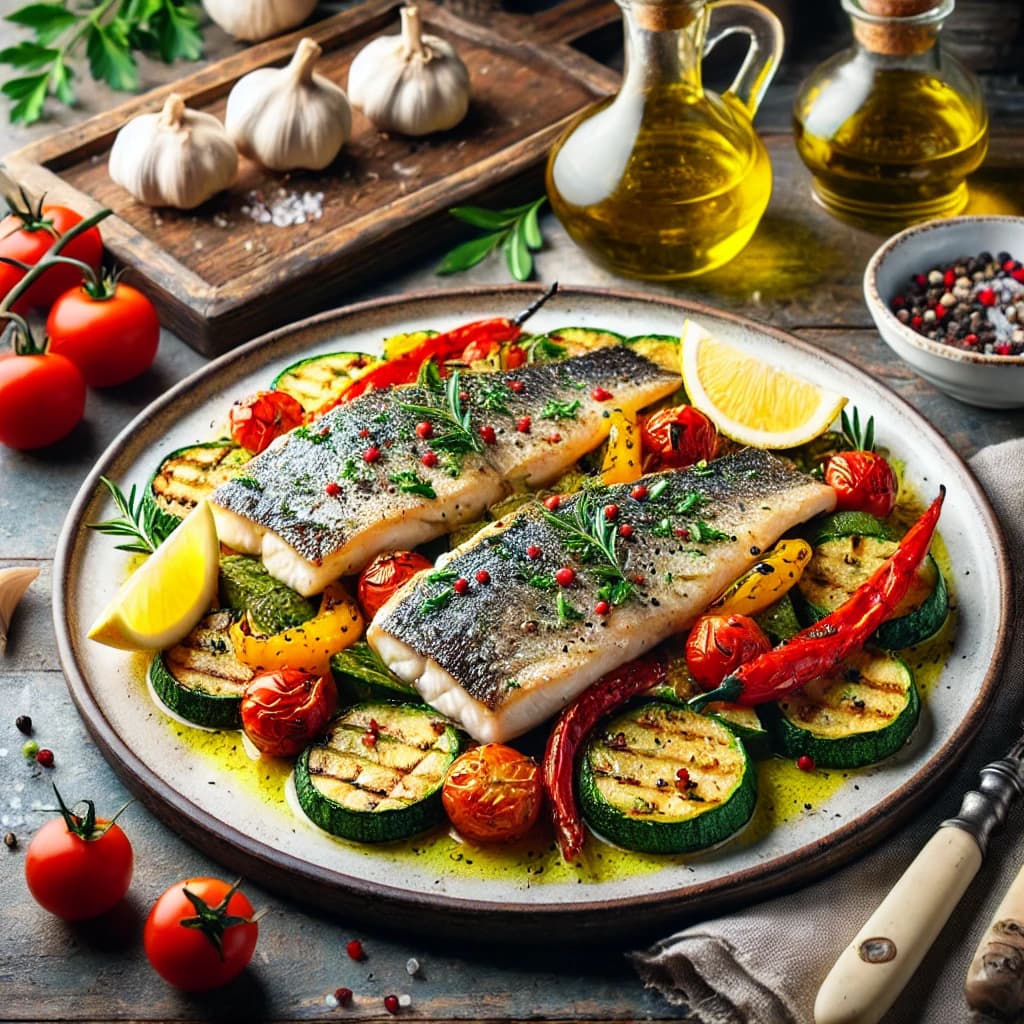
Dinner: Mediterranean Baked Sea Bass with Roasted Vegetables
A classic Mediterranean dinner rich in protein and heart-healthy fats
Snack: Hummus with Veggies
Servings: 1 Prep Time: 5 minutes
Ingredients:
- 1/4 cup hummus
- 1 carrot, sliced into sticks
- 1 celery stalk, sliced into sticks
- 1/2 bell pepper, sliced into strips
Instructions:
- Serve the hummus in a small bowl.
- Arrange the vegetable sticks around the hummus for dipping.
Frequently Asked Questions
What is the Mediterranean Diet Pyramid?
The Mediterranean Diet Pyramid is a visual guide that shows which foods to eat every day, several times a week, occasionally, and rarely. It emphasizes whole, minimally processed foods and healthy lifestyle habits.
Is the Mediterranean Diet Pyramid good for weight loss?
The Mediterranean diet may support healthy weight management because it focuses on filling, nutrient-dense foods such as vegetables, legumes, whole grains, fish, and healthy fats. Combined with regular physical activity and appropriate portion sizes, it can be part of a sustainable weight-loss plan.
Can I eat pasta on the Mediterranean diet?
Yes. Whole-grain pasta is encouraged and is typically enjoyed in moderate portions alongside vegetables, legumes, seafood, or lean proteins.
How often should I eat fish?
Most Mediterranean diet guidelines recommend eating fish or seafood at least twice per week, especially oily fish such as salmon, sardines, and mackerel.
What foods should I limit?
Limit foods that are highly processed or high in added sugars and saturated fats, including sugary drinks, processed meats, sweets, and large amounts of red meat.
Can vegetarians follow the Mediterranean Diet Pyramid?
Yes. Beans, lentils, chickpeas, nuts, seeds, whole grains, vegetables, fruits, and olive oil provide an excellent foundation for a vegetarian Mediterranean eating pattern.
Continue Your Mediterranean Journey
Meal Plans
- 7-Day Mediterranean Diet Meal Plan for Beginners (Free PDF)
- Mediterranean Diet Grocery List: What to Buy for Healthy Eating
Mediterranean Diet Guides
- Mediterranean Diet for Beginners: The Complete Guide
- 10 Mediterranean Diet Ingredients Every Healthy Kitchen Should Have
- 10 Mediterranean Diet Foods You Should Eat Every Week
- Best Olive Oil for Mediterranean Diet
Mediterranean Recipes
- Greek Chicken Pita
- Italian Chicken Salad With Almonds
- Grilled Salmon With Quinoa And Broccoli
- Greek Yogurt With Berries