This high-fiber meal plan provides a practical seven-day approach to eating more fiber. It uses vegetables, fruits, legumes, whole grains, nuts and seeds to help you create satisfying, fiber-rich meals.
Each day includes breakfast, lunch and dinner with practical portions and estimated daily fiber. The plan is designed as a flexible starting point rather than a personalized medical diet. Individual nutritional needs vary, especially for people managing digestive conditions, diabetes or other health concerns.
Increase fiber gradually and drink adequate fluids. Adding too much fiber too quickly may cause gas, bloating or abdominal discomfort.
Why fiber matters
- Supports Digestive Health: Fiber adds bulk to stool and helps it move through the digestive tract, supporting regular bowel movements and helping reduce the likelihood of constipation. It also nourishes the gut microbiome — the beneficial bacteria in your intestines.
- Helps Lower Cholesterol: Soluble fiber (found in foods like oats, beans, and apples) binds to cholesterol in the digestive system and helps remove it from the body, which can reduce LDL (“bad”) cholesterol levels.
- Regulates Blood Sugar: Fiber slows down the digestion and absorption of carbohydrates, helping support steadier blood glucose levels and insulin levels, which is especially important for people with insulin resistance or type 2 diabetes.
- Increases Satiety and Aids Weight Management: High-fiber foods are more filling, so you’re likely to eat less and feel satisfied longer. This may support healthy weight management.
- Reduces Risk of Chronic Disease: A high-fiber diet has been linked to a lower risk of heart disease, stroke, type 2 diabetes, and even certain cancers (like colorectal cancer).
7-Day High-Fiber Meal Plan
The portions below provide a practical starting point for one adult. Fiber amounts are estimates and may vary depending on the brands, ingredients, recipes and serving sizes used.
If you do not currently eat much fiber, increase your intake gradually and drink adequate fluids to reduce the likelihood of gas, bloating or digestive discomfort.
Day 1
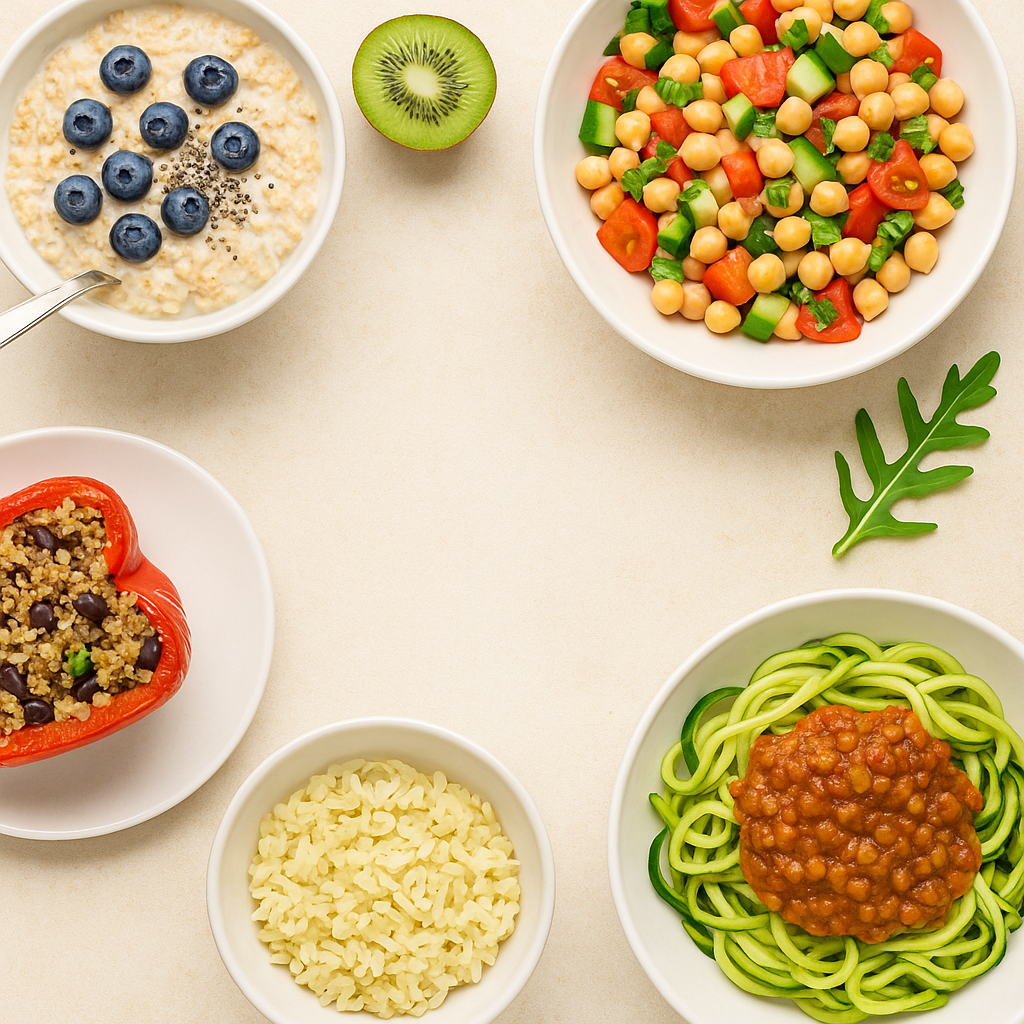
Breakfast: ½ cup dry oatmeal cooked with 1 tablespoon chia seeds, ½ cup blueberries and 1 cup unsweetened almond milk
Lunch: 1½ cups Easy Red Lentil Soup with 2 cups mixed salad greens and olive oil dressing
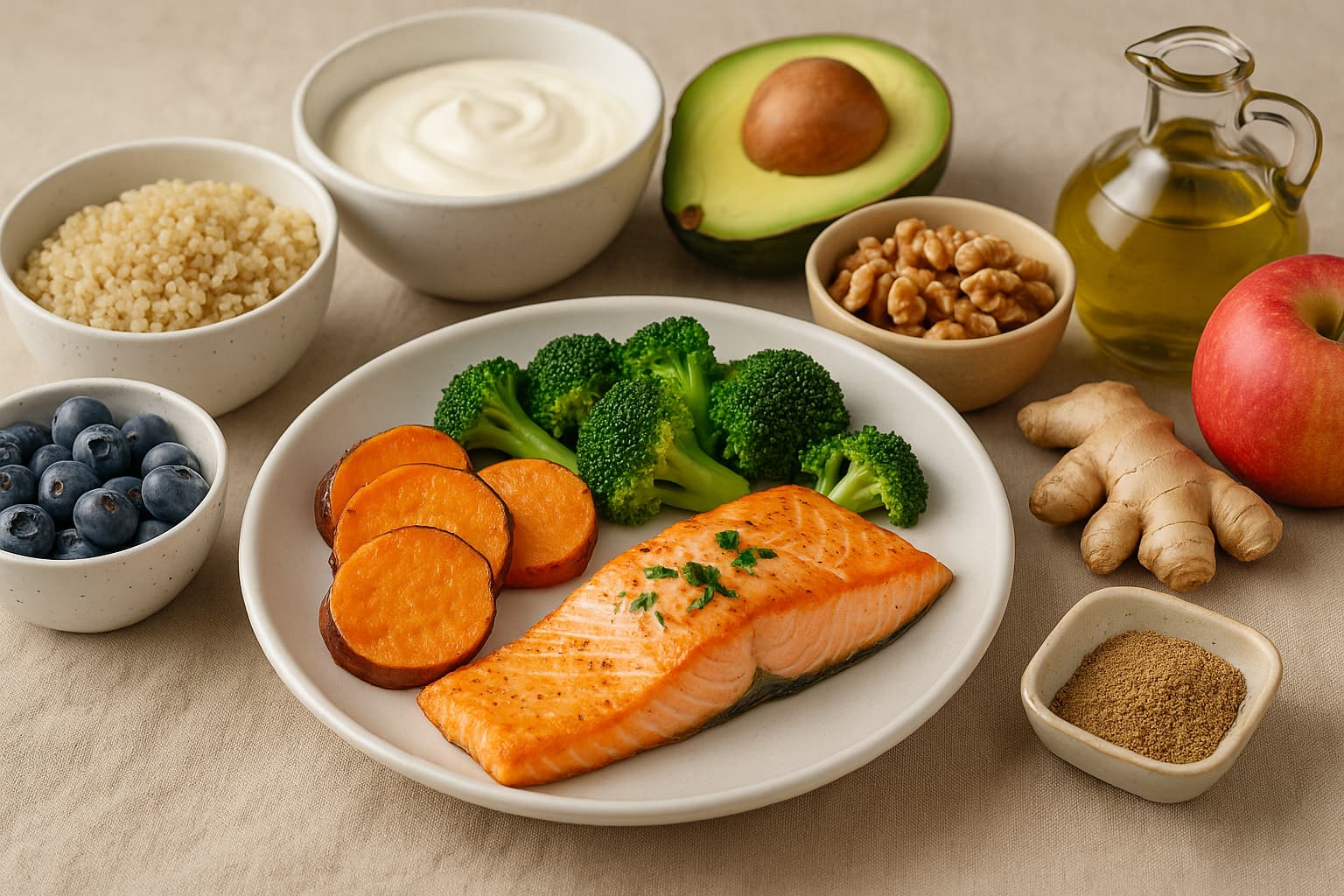
Dinner: One serving of Turmeric and Ginger Salmon with 1 cup steamed broccoli and ½ cup cooked quinoa
Estimated daily fiber: Approximately 32–35 grams
Day 2
Breakfast: Two scrambled eggs with two slices of whole-grain toast and ½ avocado
Lunch: Salad made with ¾ cup chickpeas, ½ cup cooked quinoa, ½ cup cucumber, ½ cup tomatoes and 2 cups leafy greens
Dinner: One baked cod fillet with 1 cup roasted potatoes and 2 cups mixed salad
Estimated daily fiber: Approximately 28–31 grams
Day 3
Breakfast: ¾ cup plain Greek yogurt with ½ cup raspberries, 1 tablespoon ground flaxseed and 1 ounce walnuts
Lunch: Bowl made with ½ cup cooked brown rice, ½ cup black beans, 1 cup mixed vegetables and ¼ avocado
Dinner: Two cups zucchini noodles with ½ cup cooked lentils and ¾ cup tomato sauce
Estimated daily fiber: Approximately 34–38 grams
Day 4
Breakfast: Smoothie made with 1 cup spinach, one small banana, ⅓ cup oats, 1 tablespoon chia seeds and 1 cup unsweetened milk
Lunch: Stir-fry made with ½ cup chickpeas and 2 cups mixed vegetables
Dinner: One grilled chicken breast with ½ cup cooked brown rice and 1 cup sautéed kale
Estimated daily fiber: Approximately 27–30 grams
Day 5
Breakfast: Two whole-grain waffles with 2 tablespoons almond butter and one small sliced pear
Lunch: One serving of Grilled Salmon with Quinoa and Steamed Broccoli, made with one salmon fillet, ½ cup cooked quinoa and 1 cup steamed broccoli
Dinner: Eggplant and chickpea curry made with 1 cup eggplant and ½ cup chickpeas, served with ½ cup cooked wild rice
Estimated daily fiber: Approximately 29–33 grams
Day 6
Breakfast: Quinoa porridge made with ¾ cup cooked quinoa, one small apple and cinnamon
Lunch: Stew made with one medium sweet potato and ½ cup cooked lentils, served with 2 cups arugula
Dinner: 1½ cups vegetable chili containing ½ cup black beans, served with one small corn muffin
Estimated daily fiber: Approximately 30–34 grams
Day 7
Breakfast: Two boiled eggs with two slices of whole-grain toast and one kiwi
Lunch: ¼ cup Hummus with Veggies, 1½ cups roasted vegetables and one whole-grain tortilla
Dinner: Buddha bowl made with ½ cup shelled edamame, one small roasted sweet potato, ½ cup cooked quinoa and 1 cup mixed vegetables
Estimated daily fiber: Approximately 28–32 grams
Fiber estimates are approximate and are provided for general educational purposes. Individual needs vary, and people managing digestive disorders, diabetes or other medical conditions may benefit from personalized guidance from a qualified healthcare professional.
Frequently Asked Questions
How much fiber should I eat each day?
The recommended daily fiber intake depends on your age and sex. In general, adult women should aim for about 25 grams of fiber per day, while adult men should aim for about 38 grams per day. After age 50, recommendations decrease slightly to about 21 grams for women and 30 grams for men. Most people consume much less than these amounts, making a high-fiber meal plan an easy way to close the gap.
What are the best high-fiber foods to eat every day?
Some of the best fiber-rich foods include beans, lentils, chickpeas, oats, quinoa, brown rice, berries, apples, pears, broccoli, leafy greens, sweet potatoes, chia seeds, flaxseeds, almonds, and whole-grain bread. Eating a variety of these foods throughout the week provides both soluble and insoluble fiber, along with important vitamins and minerals.
Can eating more fiber help with constipation?
Yes. Fiber helps add bulk and softness to stool, making bowel movements easier and more regular. However, it’s important to increase your fiber intake gradually and drink plenty of water. Increasing fiber too quickly without enough fluids may lead to gas, bloating, or discomfort.
Can a high-fiber diet help with weight loss?
A high-fiber diet can support healthy weight management because fiber-rich foods help you feel fuller for longer. Since they slow digestion and reduce hunger between meals, they may help you naturally eat fewer calories without feeling deprived. Combined with regular physical activity and a balanced diet, increasing your fiber intake can be an effective strategy for maintaining a healthy weight.
Explore More High-Fiber Resources
Healthy-Eating Guides
- Plant-Based Diet for Beginners: Meal Plan and Easy Recipes
- Fermented Foods: Beginner’s Guide and Free 7-Day Meal Plan
- Mediterranean Diet for Beginners: The Complete Guide